
Protect Yourself from Scams
Scammers have been around for centuries and have victimized even the smartest and most prepared of us. Scammers thrive on creating a sense of urgency in their victims and often impersonate others to create a sense of trust, familiarity or fear. They succeed because they exploit universal human psychology—fear, urgency, trust, and the desire for quick gains—rather than technical weaknesses. Even savvy individuals can be manipulated when scammers trigger emotional responses or cognitive biases.
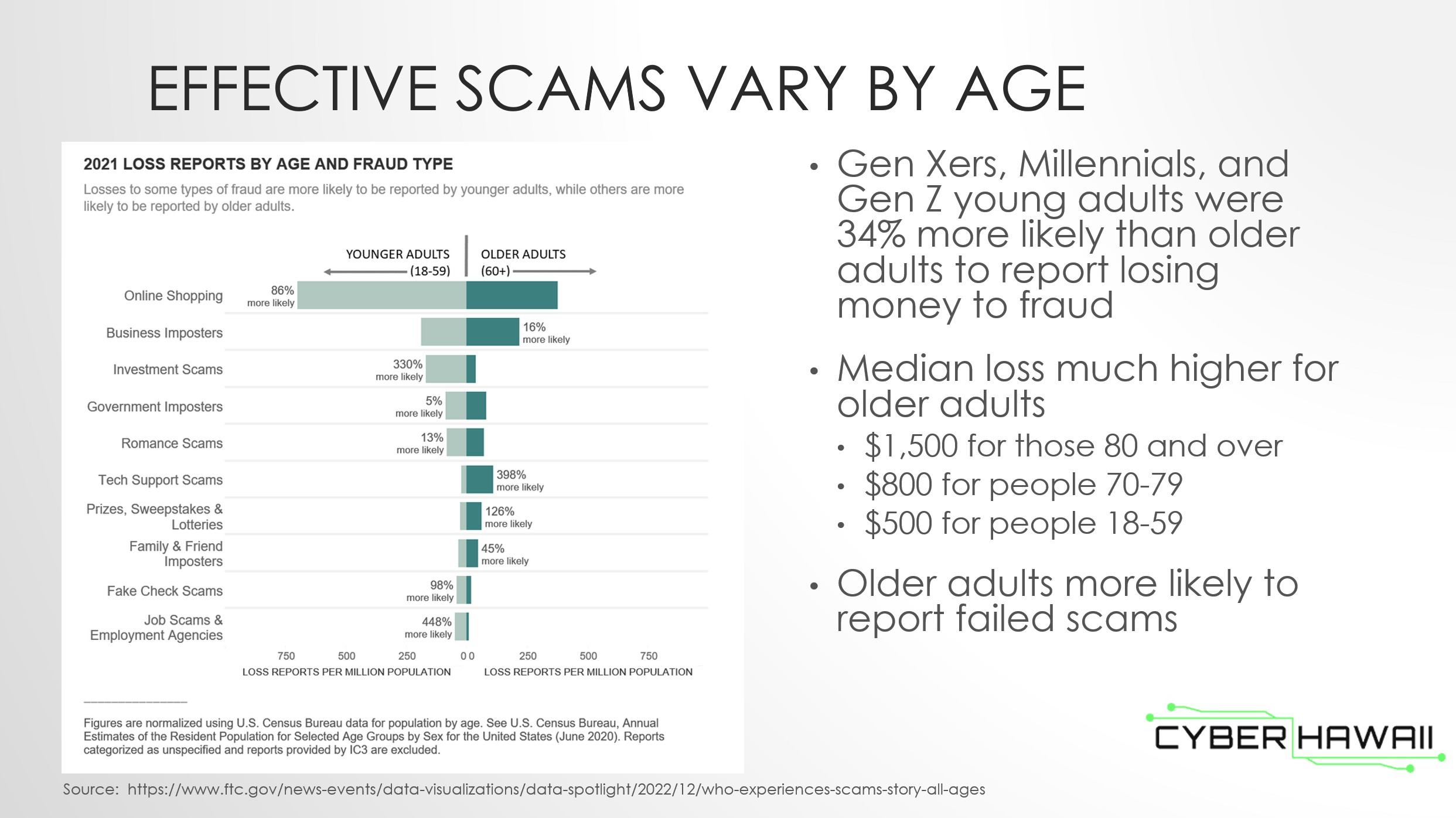
A 2021 study by the FTC showed that scammers were successful at victimizing people of all ages. The same scam did not work on everyone. But there are enough different types of scams that no age group is immune from being victimized.
There are ways for you to reduce the risk of becoming a victim. Different types of scams take advantage of different types of human weaknesses, our current state of self-awareness and how isolated we feel at the time. Keeping this in mind and reading through the tips in the following pages can make you better prepared when a cyber scammer reaches out to try and steal something from you.